
FISH
FISH
Kentucky Lake
& Lake Barkley

Progress on Controlling Invasive Carp
For years, invasive carp have been one of the biggest concerns facing Kentucky Lake and Lake Barkley. These large, fast-growing fish invaded our waterways, competed with native species for food, and created some serious headaches for anglers and boaters.
But there’s encouraging news coming from our lakes.
After years of commercial fishing, scientific research, and efforts to control their spread, Kentucky wildlife officials are seeing signs that invasive carp populations are declining. And there’s growing optimism that the fishing opportunities Kentucky Lake and Lake Barkley are known for are improving, too.
The battle certainly isn’t over, but we’ve come a long way from the days when it seemed like invasive carp were taking over our lakes.
What Are Invasive Carp?
You’ve probably heard them called Asian carp, but invasive carp is the preferred term used by fisheries agencies today.
Four species are generally included in this group: silver carp, bighead carp, grass carp, and black carp. Of these, silver and bighead carp have been particularly troublesome in Kentucky Lake and Lake Barkley.
These fish were originally introduced into the United States for purposes such as controlling algae and aquatic vegetation. Unfortunately, some escaped into natural waterways and eventually spread throughout portions of the Mississippi River basin, including the Tennessee and Cumberland river systems.
Silver and bighead carp feed primarily on plankton, the tiny organisms that form an important part of the aquatic food chain. Their enormous appetites and ability to reproduce rapidly have raised concerns about competition with native species, including fish that depend on the same food resources.
Silver carp also have a rather unpleasant habit of jumping out of the water when startled by boat motors. And we’re not talking about little fish, either. A collision with one of these large carp can be dangerous for boaters.
Unlike the common carp anglers occasionally encounter, these invasive species present a different set of challenges for fisheries managers.
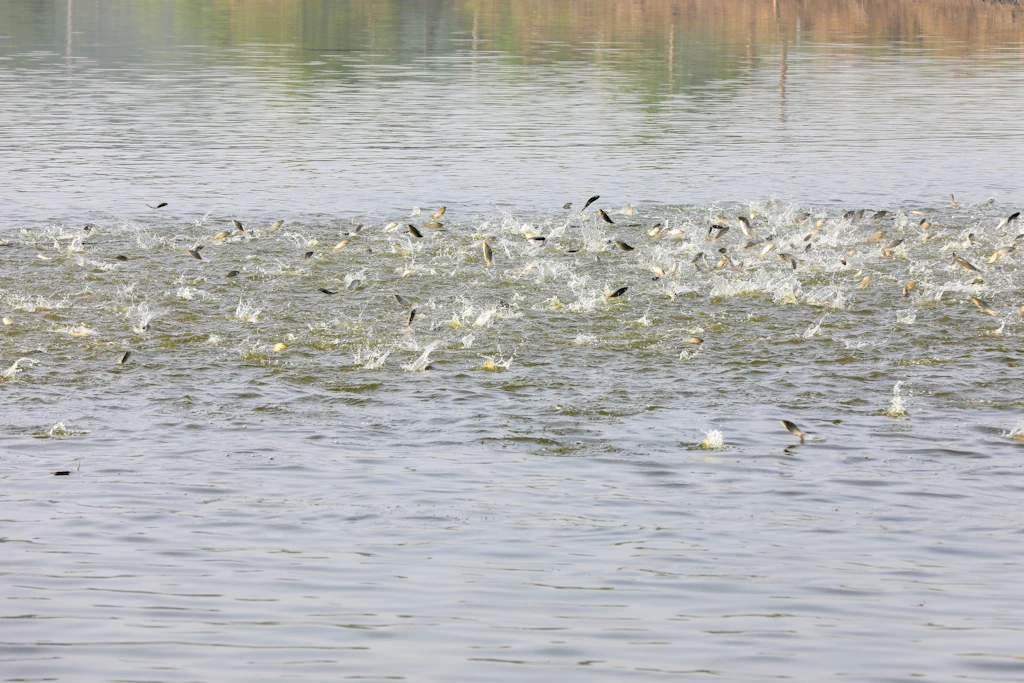
Invasive carp demonstrating their “spooked” jumping behavior.
How Invasive Carp Affected Our Lakes
As invasive carp populations grew, concerns mounted about their effects on Kentucky Lake and Lake Barkley’s fisheries.
The biggest concern wasn’t that carp were eating bass and crappie. It was their ability to consume large quantities of plankton, potentially competing with native forage fish and affecting the food supply that supports the entire fishery.
For lakes with a long history of bass tournaments, crappie fishing, and recreational boating, that was a serious issue.
Anglers also began reporting changes in fishing conditions, while the sight of silver carp jumping around boats became an unwelcome part of spending time on the water.
There were even concerns that the lakes might never return to the quality fisheries they had been known for.
Fortunately, fisheries managers, commercial fishermen, and others weren’t willing to accept that outcome.
The Fight Against Invasive Carp Is Making Progress
One of the biggest changes since invasive carp first became a major concern has been the development of a large-scale commercial removal program.
The Kentucky Department of Fish and Wildlife Resources has worked with commercial fishermen, federal agencies, and other partners to remove enormous quantities of carp from our waterways. Those efforts are producing measurable results.
Since Kentucky’s invasive carp harvest program began in 2013, commercial fishermen have removed tens of millions of pounds of these fish from Kentucky waters.
But the number of carp hauled out of the lakes isn’t the only encouraging development.
Kentucky Fish and Wildlife reports that invasive carp catch rates have declined substantially since 2019. Biologists have also found no young silver carp in their monitoring of Kentucky Lake or Lake Barkley since 2015.
That’s a particularly encouraging sign because successful reproduction is one of the biggest challenges in controlling an invasive fish population.
It doesn’t mean there are no young carp anywhere in the reservoirs or that the fish have been eliminated. It means fisheries monitoring is showing important signs of progress.
Commercial Fishing and New Technology
Commercial fishermen have played a major role in these efforts.
State programs provide financial incentives for harvesting invasive carp, helping support the large-scale removal necessary to keep populations under pressure.
Crews have also developed more effective techniques for locating and capturing schools of carp. Some commercial operations are capable of removing tens of thousands of pounds in a single day.
Another important development is the BioAcoustic Fish Fence at Barkley Dam.
This system uses a combination of sound, light, and bubbles to discourage invasive carp from moving upstream through the lock system. According to Kentucky Fish and Wildlife, the technology has reduced upstream carp movement by approximately 50 percent.
No single technique is going to solve the entire problem, but combining commercial harvest with monitoring and deterrent technology is helping fisheries managers make meaningful progress.
Is Fishing Getting Better on Kentucky Lake and Lake Barkley?
This might be the most encouraging part of the story for anglers.
As invasive carp populations decline, there’s growing optimism about the future of recreational fishing on Kentucky Lake and Lake Barkley.
Longtime professional bass angler Mark Menendez, who knows Kentucky Lake particularly well, has described a substantial comeback in the bass fishery. He has pointed to improving largemouth bass populations and better fishing opportunities as signs that the lake is moving in the right direction.
That’s encouraging news, especially for anglers who remember the concerns surrounding invasive carp several years ago.
Of course, it’s important to keep things in perspective.
Bass, crappie, and other fish populations are influenced by many factors, including spawning success, water conditions, available habitat, and forage populations. We can’t attribute every improvement in fishing directly to carp removal.
But reducing the number of invasive fish competing for resources is an important step toward protecting the health of our fisheries.
And for anglers who may have written off Kentucky Lake or Lake Barkley during the height of the carp problem, there’s good reason to take another look.
The Work Isn't Finished
As encouraging as the progress has been, invasive carp haven’t disappeared from Kentucky Lake and Lake Barkley.
Continued commercial harvesting, population monitoring, and efforts to prevent additional fish from moving into the reservoirs will remain important for years to come.
There’s also no guarantee that carp populations will continue declining without ongoing management.
That’s why Kentucky Fish and Wildlife and its partners continue investing in removal programs and researching new ways to control these fish.
For the communities surrounding our lakes, those efforts are about more than fishing. Recreational boating, tourism, local businesses, and the overall health of the reservoirs all have a stake in the outcome.
The good news is that the work is showing results.
Kentucky Lake and Lake Barkley remain popular destinations for bass, crappie, catfish, and other fishing opportunities. And with continued progress against invasive carp, there’s reason to be optimistic about what lies ahead.
We’ve still got work to do, but the future of fishing around our lakes is looking brighter than it did just a few years ago.

MORE FISHING
HOW'S THE BITE?
- Largemouth
- Smallmouth
- Crappie
- Bluegill Not Available
- Catfish Not Available
- White Bass Not Available
- Yellow Bass Not Available