
FISH
FISH
Kentucky Lake
& Lake Barkley

Bowfishing on Kentucky Lake & Lake Barkley
Most fishing trips involve a rod, reel, and a little patience. Bowfishing takes a different approach.
Armed with specialized archery equipment, bowfishers take aim at fish swimming near the surface or in shallow water. It’s part fishing, part archery, and a pretty interesting way to spend an evening on Kentucky Lake or Lake Barkley.
And once the sun goes down, the experience gets even more interesting. Boats equipped with bright lights illuminate the water, giving anglers a chance to spot fish and take aim after dark.
For those looking to try something different during a visit to our lakes, bowfishing offers a unique experience that doesn’t involve a fishing pole!
What Fish Can You Target?
Bowfishing generally focuses on nongame fish, often referred to as rough fish. Around Kentucky Lake and Lake Barkley, common targets include carp, buffalo, and certain species of gar.
Invasive carp, particularly silver and bighead carp, have received considerable attention because of their impact on the reservoirs. Harvesting these fish can also contribute to efforts to reduce invasive carp populations.
However, not every fish swimming near the surface is a legal bowfishing target.
Kentucky and Tennessee have regulations governing which species may be taken, along with limits for certain fish. Protected species and popular sport fish such as bass and crappie cannot simply be targeted with bowfishing equipment.
Kentucky also has specific rules for catfish, paddlefish, and other regulated species.
Before heading out, make sure you know which fish are legal to shoot and which must be left alone. Accurate species identification is especially important because, unlike traditional catch-and-release fishing, a fish struck by a bowfishing arrow generally cannot be released unharmed.
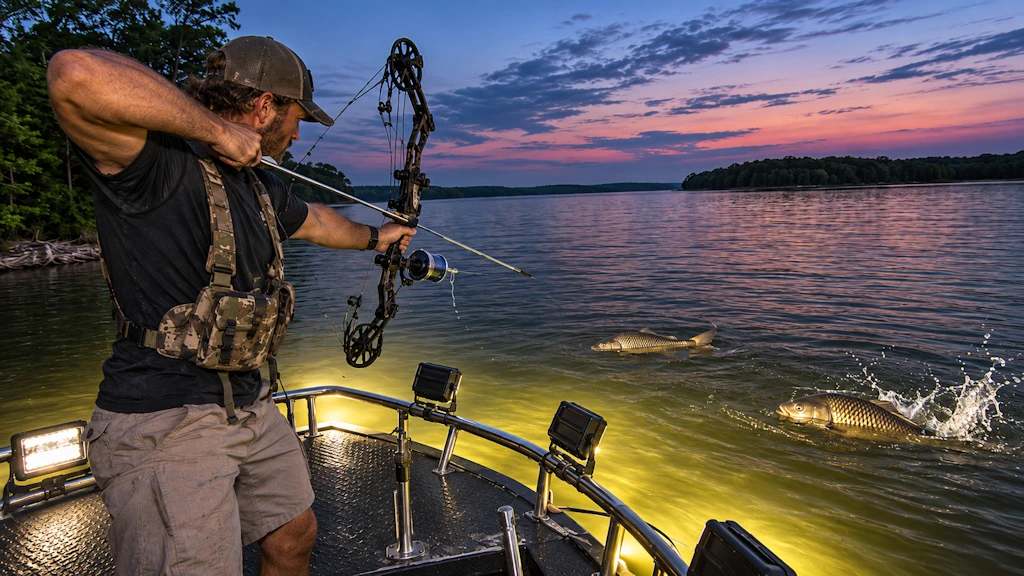
Illustration demonstrating bowfishing. AGI.
When and Where to Go Bowfishing
Bowfishing opportunities can be found throughout much of the year, but warmer weather often provides some of the most enjoyable conditions.
During spring and summer, fish may be found in shallower areas of the reservoirs, including coves, creek mouths, and flats. Areas with good visibility are especially attractive because anglers need to see their targets before taking a shot.
Water clarity can make a big difference.
Heavy rainfall and runoff may leave portions of the lakes muddy, making fish difficult to spot. Clearer water generally improves visibility, although the amount of available light and water depth also influence how easily fish can be seen.
Bowfishing After Dark
Nighttime bowfishing is especially popular around Kentucky Lake and Lake Barkley.
Many dedicated bowfishing boats are equipped with powerful lights that shine into the water, allowing anglers to spot fish swimming below the surface.
Fishing after dark can also provide a break from the summer heat and some of the recreational boat traffic that fills the lakes during daylight hours.
But daytime bowfishing has its advantages, too. A good pair of polarized sunglasses can help anglers see beneath the surface by reducing glare.
And no matter what time you go, remember that fish viewed through water aren’t always exactly where they appear to be. Refraction makes aiming a little different from traditional archery, and learning to compensate for that takes practice.
Bowfishing Equipment and Boats
Bowfishing uses specialized equipment designed to shoot and retrieve fish.
A typical setup includes a bow, a heavy fishing arrow with a retrieval point, and a line attached to a reel or retrieval system. The equipment allows an angler to retrieve the arrow and fish after a successful shot.
While bowfishing can be done from shore where permitted, many enthusiasts prefer boats designed or modified specifically for the activity.
These boats often feature elevated shooting decks, powerful lighting, and open areas that allow anglers to move around safely.
The elevated platform provides a better view into shallow water, while the lights make nighttime fishing possible.
Know the Rules Before Heading Out
Kentucky Lake and Lake Barkley extend across two states, so bowfishers need to understand the applicable fishing regulations.
Kentucky generally permits bowfishing for rough fish year-round, with restrictions on certain species, harvest limits, and locations. Tennessee has its own regulations governing permitted species and fishing methods.
Anglers must also have the appropriate fishing license, subject to any applicable reciprocal licensing agreements.
Before your trip, review the latest regulations from the Kentucky Department of Fish and Wildlife Resources and the Tennessee Wildlife Resources Agency.
Pay particular attention to restricted areas around dams, wildlife refuges, and other locations where access or fishing methods may be limited.
And remember that fish taken by bowfishing should be handled and disposed of responsibly. Leaving harvested fish along the shoreline or at a boat ramp isn’t acceptable.
A Few Safety Considerations
Navigating Kentucky Lake and Lake Barkley after dark requires extra attention.
Shallow bars, submerged stumps, changing lake levels, and other boaters can create hazards, particularly outside marked navigation channels.
Make sure your boat has the required navigation lights, wear appropriate safety equipment, and keep an eye on changing weather conditions.
Bowfishing equipment also deserves careful handling. Always be aware of other people on the boat, and never take a shot unless you have a clear, safe target.


MORE FISHING
HOW'S THE BITE?
- Largemouth
- Smallmouth
- Crappie
- Bluegill Not Available
- Catfish Not Available
- White Bass Not Available
- Yellow Bass Not Available