
FISH
FISH
Kentucky Lake
& Lake Barkley

Bank Fishing on Kentucky Lake & Lake Barkley
You don’t need a boat to enjoy some great fishing on Kentucky Lake and Lake Barkley. With hundreds of miles of shoreline, public recreation areas, and access to a variety of fishing habitats, there are plenty of opportunities to cast a line without ever leaving dry land.
Of course, finding a good place to fish from the bank isn’t quite as simple as pulling over wherever you see water.
Some shorelines offer access to deeper water, submerged cover, and other features that attract fish. Others may look promising but offer little more than a shallow, featureless bottom.
A little planning can make all the difference, especially if you’re visiting our lakes for the first time.
Finding a Good Place to Fish from Shore
One of the most important things to consider when bank fishing is what’s happening beneath the surface.
A shoreline with access to a creek channel, drop-off, rocky point, or submerged brush can provide opportunities that aren’t available along a broad, shallow bank.
That’s particularly important during summer and winter, when some fish may spend more time in deeper water.
Rocky shorelines and riprap can also be productive. These areas provide habitat for smaller aquatic creatures and forage fish, which can attract larger fish looking for a meal.
And don’t overlook bridges, fishing piers, and other permitted public access areas. Some offer opportunities to reach water that would otherwise be difficult to fish without a boat.
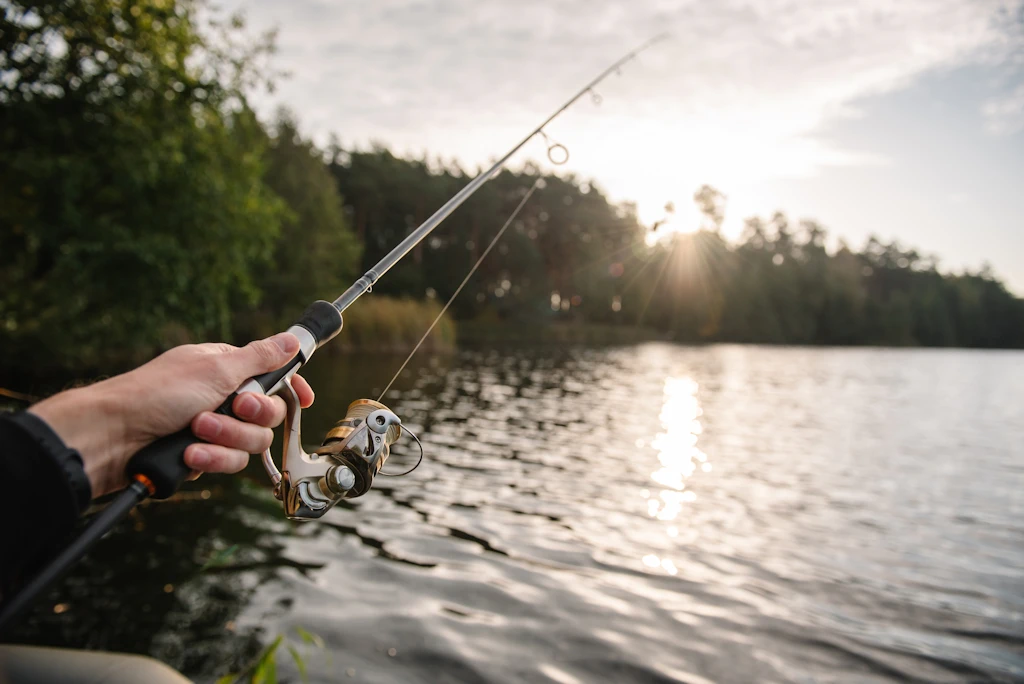
Bank fishing on the lake.
Use a Map Before You Go
A good lake map can be one of the most useful tools a bank angler has.
Contour maps help identify where deeper water comes close to shore, while satellite imagery can provide a better look at public access roads, points, and shoreline features.
For example, a bank near a creek channel bend may allow you to reach several depths with a single cast. A gently sloping flat, on the other hand, may offer better opportunities when fish are actively using shallow water.
Neither type of location is automatically better. It depends on the season and the species you’re trying to catch.
Where Can You Bank Fish on Kentucky Lake & Lake Barkley?
There are several types of public access areas worth investigating around our lakes.
Land Between the Lakes: The recreation area offers extensive shoreline along both Kentucky Lake and Lake Barkley. Bank fishing is generally permitted along its lake shorelines except in posted wildlife refuges and other restricted areas. Some locations are accessible from recreation areas and roads, while others require a walk to reach the water.
Fenton Lake Access: Located near Eggner’s Ferry Bridge on Kentucky Lake, this public access area provides shoreline fishing opportunities and nearby parking. It’s a convenient area to investigate if you’re visiting the central portion of Kentucky Lake.
Dam tailwaters: The Tennessee River below Kentucky Dam and the Cumberland River below Barkley Dam provide additional bank fishing opportunities. These areas can attract several species of fish, although water releases can create strong currents and rapidly changing conditions.
Public boat ramps and recreation areas may also provide shoreline access, but don’t assume fishing is allowed from every dock, ramp, or marina. Pay attention to posted rules and avoid interfering with boats launching or loading.
For anglers unfamiliar with the area, Kentucky Fish and Wildlife’s public fishing access information is a good place to begin looking for locations.
What Fish Can You Catch from the Bank?
One of the nice things about fishing Kentucky Lake and Lake Barkley is the variety of fish available throughout the year.
Crappie: Spring is a popular time for bank anglers to target crappie as fish move toward spawning habitat. Brush piles, stakebeds, and shallow cover can be worth investigating when fish are using areas close to shore.
Bluegill and shellcrackers: Late spring and early summer bring opportunities to catch these popular panfish around shallow spawning areas. Small hooks, light tackle, worms, and crickets are common choices.
Bass: Largemouth bass may be found around rocky banks, points, shallow cover, and other shoreline structure. Soft plastics, crankbaits, and spinnerbaits can be useful depending on the conditions.
Catfish: Catfish are a popular target for shore anglers, particularly in areas with access to channels, deeper water, or current. Bottom-fishing presentations with appropriate natural or prepared baits can provide opportunities during much of the year. The Canal at Grand Rivers is a popular spot for catfishermen.
White bass and other species: Depending on the location and season, bank anglers may also encounter white bass, sauger, and other fish, particularly around river and tailwater areas.
The key is selecting a location that gives you a reasonable chance of reaching the fish you’re targeting.
Match Your Tackle to the Fish
You don’t need a boatload of expensive equipment to enjoy bank fishing.
A dependable spinning rod and reel can handle many situations, and a basic assortment of hooks, sinkers, floats, and artificial lures will cover plenty of fishing opportunities.
However, the same setup won’t necessarily work equally well for every species.
Light tackle and small hooks are well suited for bluegill and other panfish. Crappie anglers often use small jigs or minnows, while catfish may require heavier rods, stronger line, and enough weight to hold bait in place when fishing current.
It’s also worth thinking about your casting distance.
A bank with deeper water close to shore may not require especially long casts. On a broad, shallow shoreline, reaching productive water may be more challenging.
And don’t forget about landing your catch. A long-handled net can be helpful when fishing from a high bank, rocky shoreline, or designated fishing platform.
Pay Attention to Water Levels and the Seasons
Kentucky Lake and Lake Barkley are managed reservoirs, and their water levels change throughout the year.
That can have a big effect on bank fishing.
Higher water levels may flood shoreline brush and vegetation, creating additional shallow cover. As water levels fall toward winter elevations, some of those same areas become exposed.
A fishing spot that worked beautifully in May might look completely different in October.
Seasonal fish movements matter, too.
Spring often brings crappie, bass, bluegill, and shellcrackers closer to shore as spawning activity develops. During summer, some fish move toward deeper water, making banks near channels and drop-offs worth investigating. Fall can bring changing baitfish activity and additional shallow-water opportunities, while winter fishing may favor shoreline locations with access to deeper structure.
Of course, these are general patterns, not a guarantee of where fish will be on any particular day.
Check current lake levels and recent fishing reports before your trip, and be prepared to try another location if the fish aren’t cooperating.
A Little Bank Fishing Courtesy Goes a Long Way
Bank fishing is often a relaxing way to spend a few hours around our lakes, and a little consideration helps keep it enjoyable for everyone.
Give other anglers plenty of room, avoid casting across their lines, and be mindful of people using nearby boat ramps, trails, and recreation areas.
Take your discarded fishing line, hooks, bait containers, and other trash with you. Monofilament line is particularly hazardous to wildlife, so never leave it along the shoreline.
And before heading out, make sure you have the appropriate Kentucky or Tennessee fishing license and understand the regulations for the waters you’re fishing.
Enjoy Fishing from the Banks of Our Lakes
There’s something to be said for finding a quiet spot along the shoreline, setting up a couple of rods, and enjoying a few hours on the water without the expense or preparation of taking out a boat.
Bank fishing can be as simple as taking the family out for an afternoon of bluegill fishing or as involved as carefully studying contour maps to find a promising location for bass or crappie.
The important thing is choosing the right spot for the conditions and the fish you’re hoping to catch.
With a little preparation and a willingness to explore, Kentucky Lake and Lake Barkley offer plenty of opportunities to enjoy fishing from shore.

MORE FISHING
HOW'S THE BITE?
- Largemouth
- Smallmouth
- Crappie
- Bluegill Not Available
- Catfish Not Available
- White Bass Not Available
- Yellow Bass Not Available